
What Wilkes County Probate Covers
Probate in Wilkes County is handled by the Clerk of Superior Court through the court system. The research file is clear that Wilkes County does not have a separate probate court. Estate matters use the Clerk of Superior Court / estates division at the courthouse, while land records that may be tied to an estate are handled by the Register of Deeds. That split matters. A will, estate file, accounting, or guardianship question starts with the clerk. A deed copy or recorded land index search starts with the Register of Deeds.
North Carolina estate subjects include probate of wills, qualification of personal representatives, decedent estate administration, inventories, annual and final accounts, creditor claims, small estate collection procedures, year's allowance, minor estates, trusts when court action is involved, and special proceedings tied to estate or real property disputes. Guardianship and incompetency matters also route through the clerk, but those files may contain confidential personal or medical information. Public access depends on the file, the document, and any statute or court order restricting it.
The North Carolina wills and estates help topic is the statewide starting point for estate procedure. Wilkes County readers still need the local clerk for the actual county file, certified estate papers, and counter access to paper records. For broader court access, the North Carolina eCourts Portal may show public estate or special proceeding case information when the record is available online.
Wilkes County Probate Terms
Estate files use terms that are easy to confuse. The definitions below keep the Wilkes County probate record path clear, especially when a person is deciding whether to search the Portal, visit the clerk, or contact the Register of Deeds for a separate land document.
- Testator
- The person who made a will.
- Executor
- A person named in a will to carry out the estate, if qualified by the clerk.
- Personal representative
- The general term for an executor or administrator who is approved to act for an estate.
- Intestate
- Dying without a valid will, which means estate administration follows North Carolina law.
- Guardianship
- A court or clerk process to appoint someone to act for a minor or an incompetent adult.
- Special proceeding
- A clerk/court proceeding that can include estates, partitions, foreclosures, guardianships, and some real-property matters.
The North Carolina guardianship help topic fits this section because guardianship is one of the court-related probate subjects handled through the clerk.
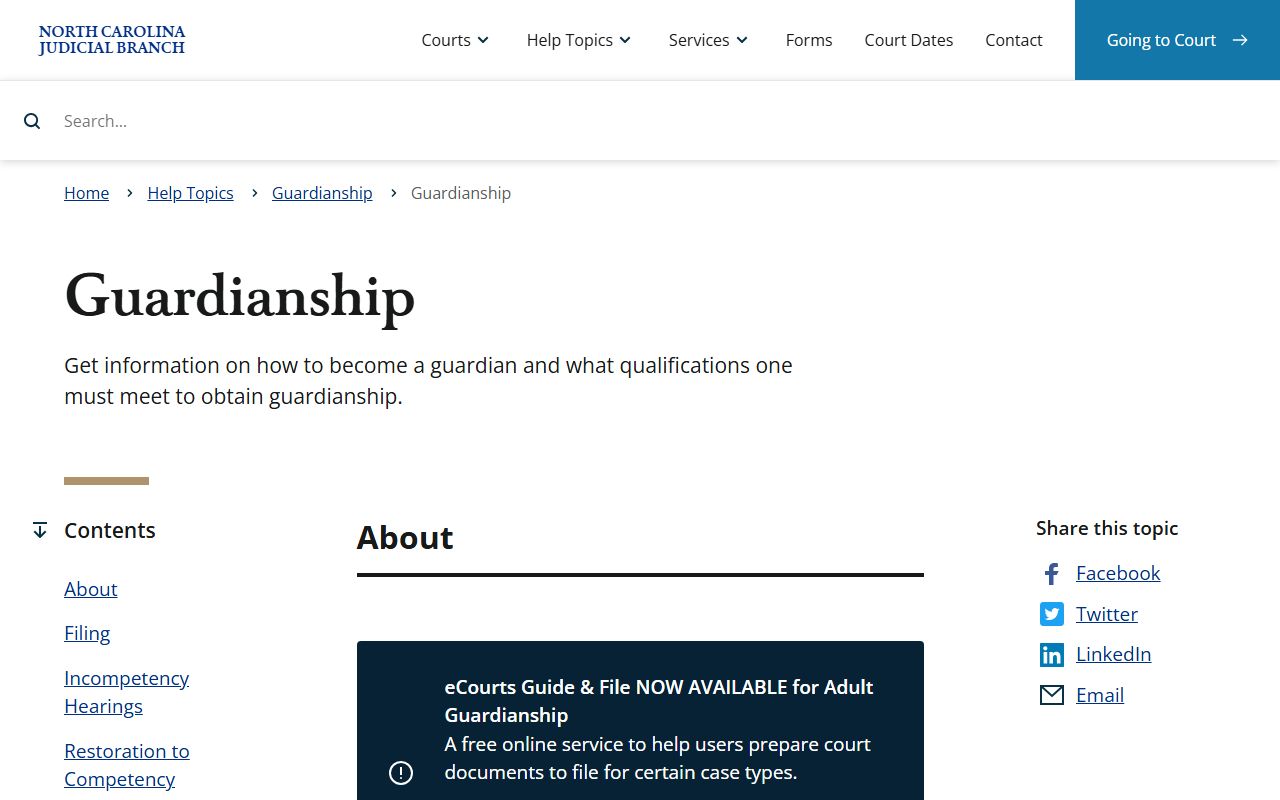
Guardianship records can overlap with Wilkes County estate work, but the medical, personal, and incapacity details in those files are more likely to be restricted than a routine estate docket entry.
Search Wilkes County Probate Records
A Wilkes County estate search usually starts with the name of the decedent, the estate case number if known, or the name of a personal representative. Public estate case information may be available through the eCourts Portal, but paper files and certified copies are still clerk-office functions. The Clerk of Superior Court is also the place to ask which estate procedure applies when opening an estate, filing a will, or checking whether a qualified representative has been appointed.
- Search the North Carolina eCourts Portal by name or record number, then narrow to Wilkes County if the search screen offers a location filter.
- If the estate does not appear online, call or visit the Wilkes County Clerk of Superior Court to ask about paper estate files or clerk terminal access.
- Use the courthouse counter for certified copies, letters, and paper-file review when Portal does not provide the document needed.
- Use the Register of Deeds only for recorded deeds or land records tied to estate property, not for the probate case file itself.
- Use the Judicial Branch public-record request channel for existing Judicial Branch administrative records, not as a substitute for normal case-file access through the clerk.
| Field Label | Type | Required | Options / Format Notes |
|---|---|---|---|
| Smart Search | Text | No | Search by decedent name, party name, record number, attorney, or other indexed term. |
| Record / Case Number | Text | No | Best for an exact estate file lookup when the number is known. |
| Party Name | Text | No | Use decedent, personal representative, interested party, or attorney name. |
| Case Type | Filter | No | Estate or special proceeding filters may be available; live options were not captured. |
| Location | Filter | No | Select Wilkes County when the Portal allows a county or court location filter. |
The Wilkes Tax Office deed-search page is useful only as a land-record clue and warns that limited deed copies are not a substitute for Register of Deeds or Clerk of Superior Court research.
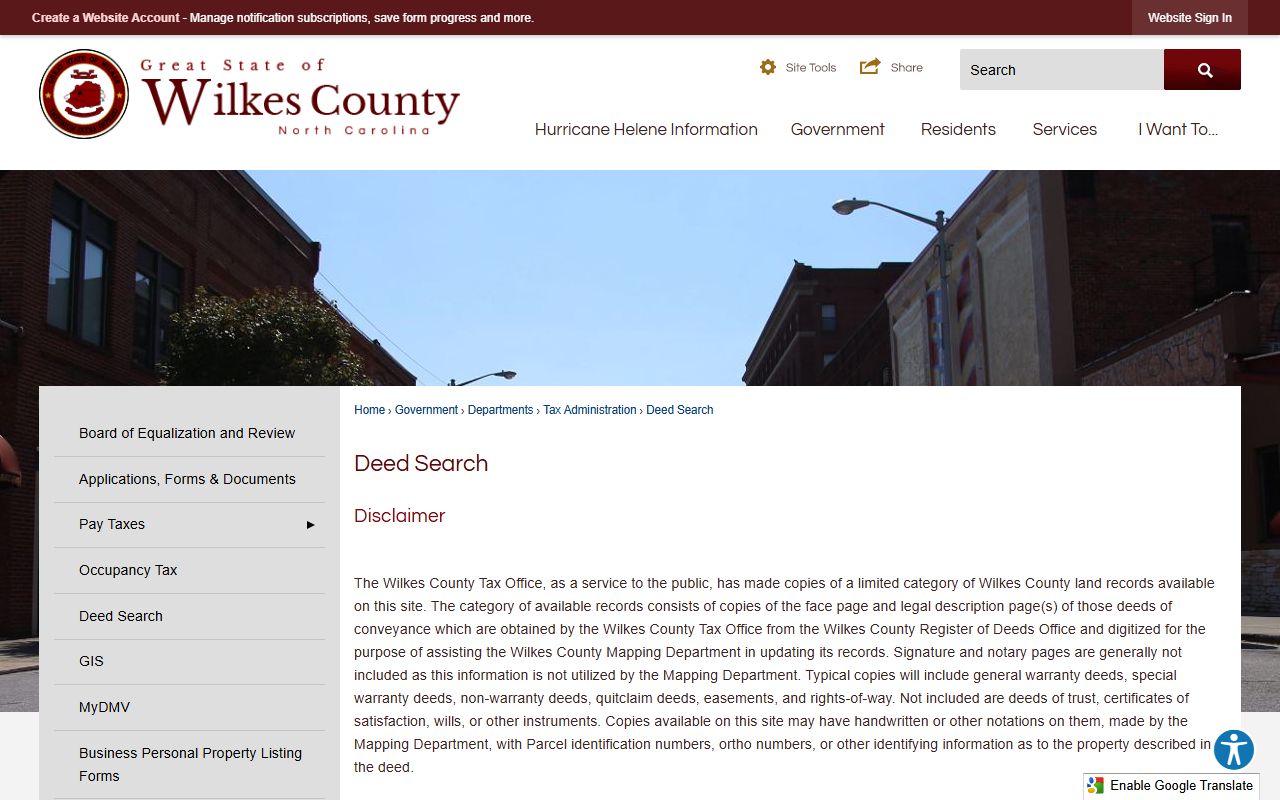
That warning is important for estate users because a real-property clue may point to a deed, but the estate file, will, inventory, or account remains a clerk record.
Wilkes County Probate Office
Because Wilkes County probate records are handled through the Clerk of Superior Court, the local contact card is the estates access point. The courthouse also hosts Superior Court, District Court, magistrates, and other court contacts, but probate questions should begin with the clerk's office.
Wilkes County Clerk of Superior Court
Estates Division / Clerk of Superior Court
500 Courthouse Drive
Wilkesboro, NC 28697
(336) 651-4400
Monday-Friday, 8:30 a.m.-5:00 p.m.
Mail payments listed in the Wilkes court payment information go to Clerk of Superior Court, Wilkes County Courthouse, 500 Courthouse Drive, Suite 1115, Wilkesboro, NC 28697. Estate filings and estate-copy needs should be confirmed with the clerk before mailing anything because the research did not capture a Wilkes-specific estate fee table.
Wilkes County Probate Fees
The captured Wilkes research did not locate a county-specific probate filing fee table. That is an important gap, so the safest estate fee guidance is to confirm current costs with the Clerk of Superior Court or the current North Carolina Judicial Branch court costs schedule before filing. Do not rely on older copied fee lists, because estate costs can depend on the filing type, qualification, copies, certification, or later accountings.
| Item | Amount / Status |
|---|---|
| Estate filing fee | Not captured in Wilkes research; confirm with Clerk of Superior Court. |
| Certified estate copies | Amount not captured; request current clerk copy and certification fees. |
| Letters or qualification copies | Amount not captured; verify before ordering. |
| Register of Deeds certified vital record copy | $10 for birth, death, and marriage certificates, separate from probate files. |
Note: Estate fee amounts were a research gap, so the Wilkes clerk should confirm costs before filing or ordering copies.
What Wilkes County Probate Records Show
A Wilkes County probate file can show the decedent name, estate case number, will filings, application or petition papers, orders, qualification of a personal representative, inventory filings, annual or final accounts, creditor claim activity, notices, receipts, distribution papers, and related special proceeding entries. The exact contents depend on whether the estate is testate, intestate, small, contested, tied to real property, or linked to a guardianship or minor settlement.
Land can create confusion. A probate file may explain who has authority to act for an estate, while a deed record shows an instrument recorded with the Register of Deeds. The Wilkes Register of Deeds online records system can help with recorded land documents, but it does not replace the clerk's estate file.
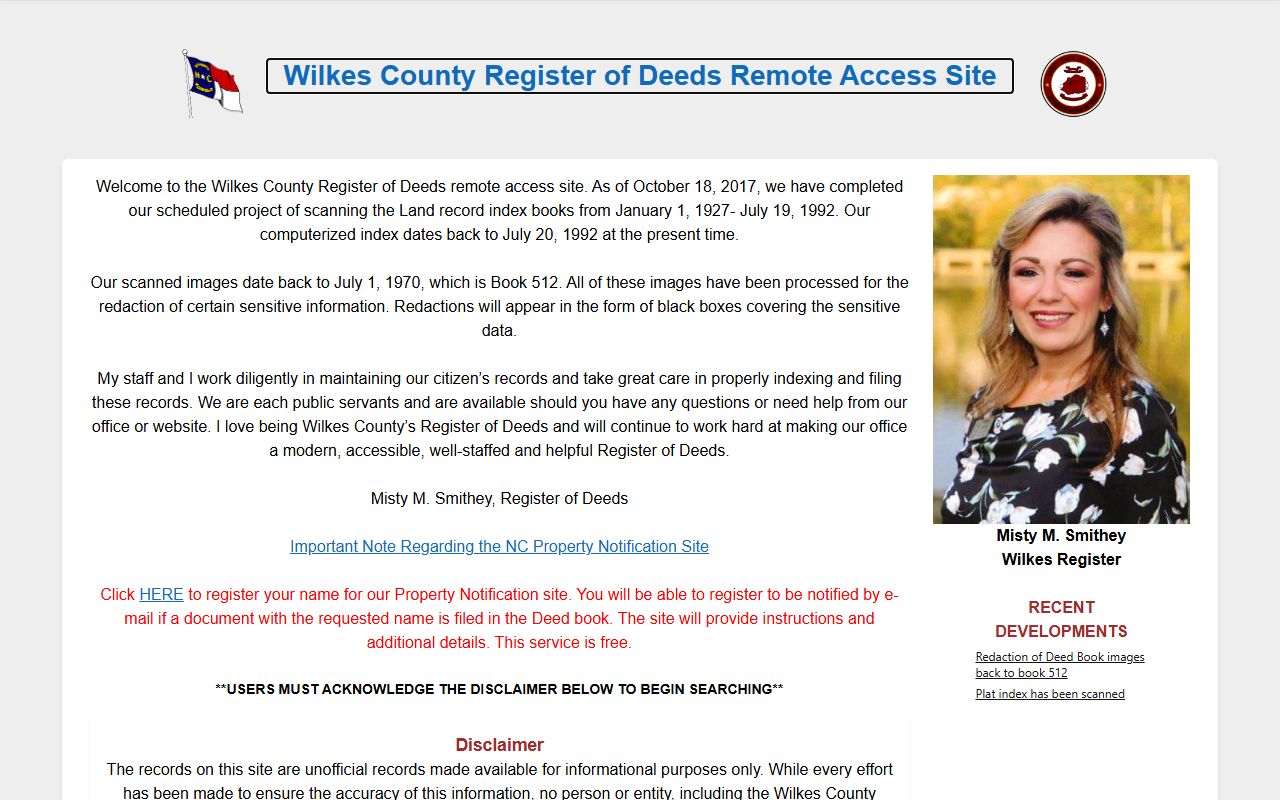
Use the Register of Deeds record path for recorded instruments and the clerk path for estate administration, wills, accountings, guardianships, and certified court-file documents.
| Record Field | What It Helps Confirm |
|---|---|
| Estate case number | The court file used for clerk lookup and copy requests. |
| Decedent name | The person whose estate is being administered. |
| Personal representative | The person authorized to act after clerk qualification. |
| Inventory or account | Estate asset reporting and later administration status. |
| Orders and letters | Clerk action, authority, or official estate status. |
Restricted Wilkes County Probate Records
Many estate records are public, but public does not mean every probate-related document is online or open without limits. Guardianship and incompetency files can include medical facts, incapacity findings, minor information, and personal identifiers. Those details may be confidential, redacted, or available only to parties, attorneys, the court, or people with a court order. Adoption records should not be treated as ordinary public probate records.
Sealed estate disputes, protected minor settlements, financial account data, Social Security numbers, and medical details may be withheld from public inspection. If Portal does not show a document, that does not prove the record does not exist. It may be paper-only, restricted, sealed, or simply not a document type viewable online. The clerk is the correct access point for status and copy questions, while legal access disputes should be handled through court procedure or counsel.
Estate users often also need Wilkes County marriage or divorce records for family-history or heirship research, but those records come from different offices.